Open post Boomerang Lilac

Propagation by air layering: a method to “clone” a shrub

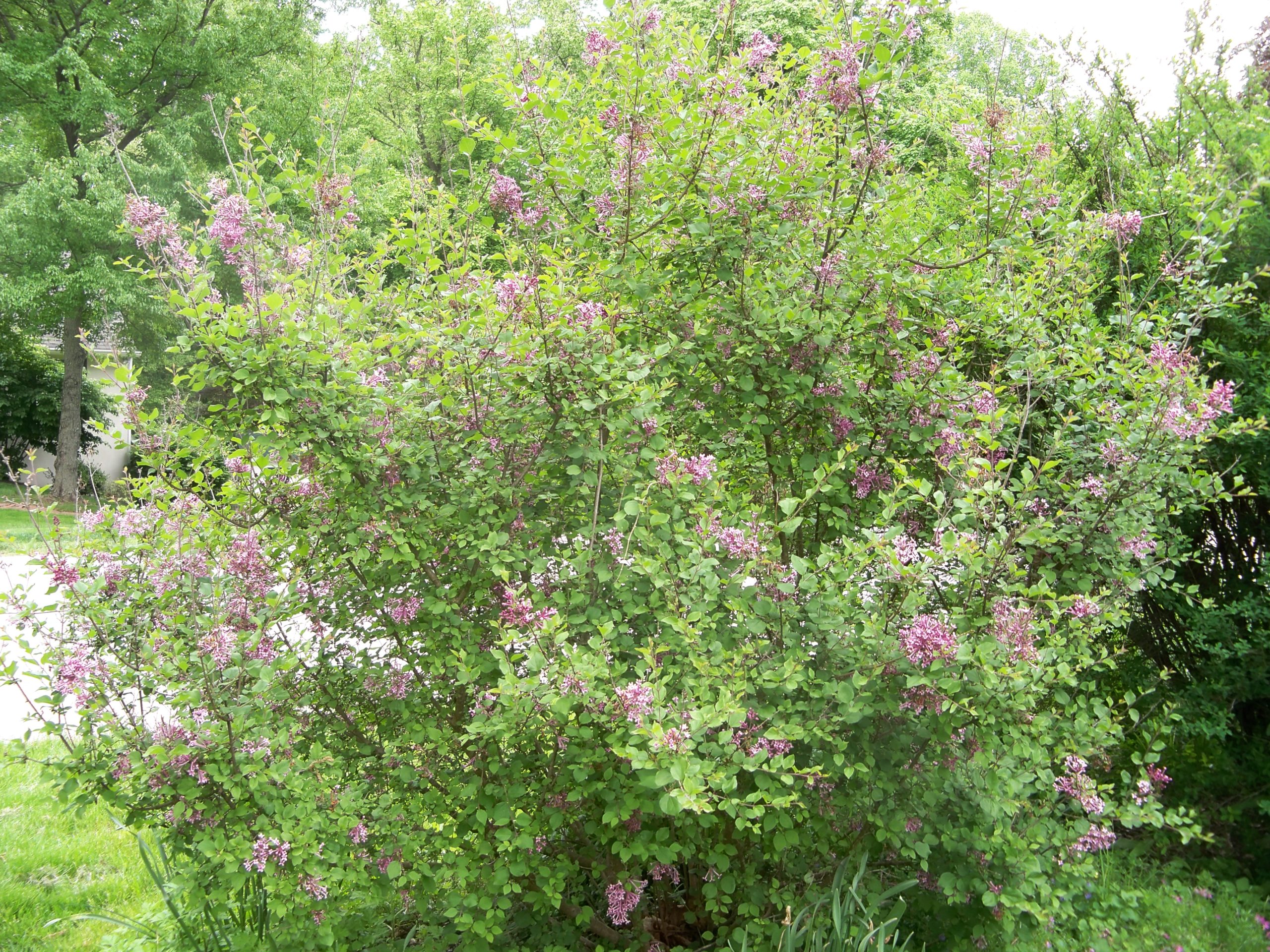
Propagation of woody plants by cutting often fails. The cuttings die before the roots develop. Propagation by air layering is a simple technique by which a branch is wrapped with potting medium to promote formation of roots. After the roots formed, the branch is cut off from the parent plant and transplanted in a pot. This post shows you how to clone a shrub using a Boomerang Lilac shown on the featured image.

Tools for propagation by air layering

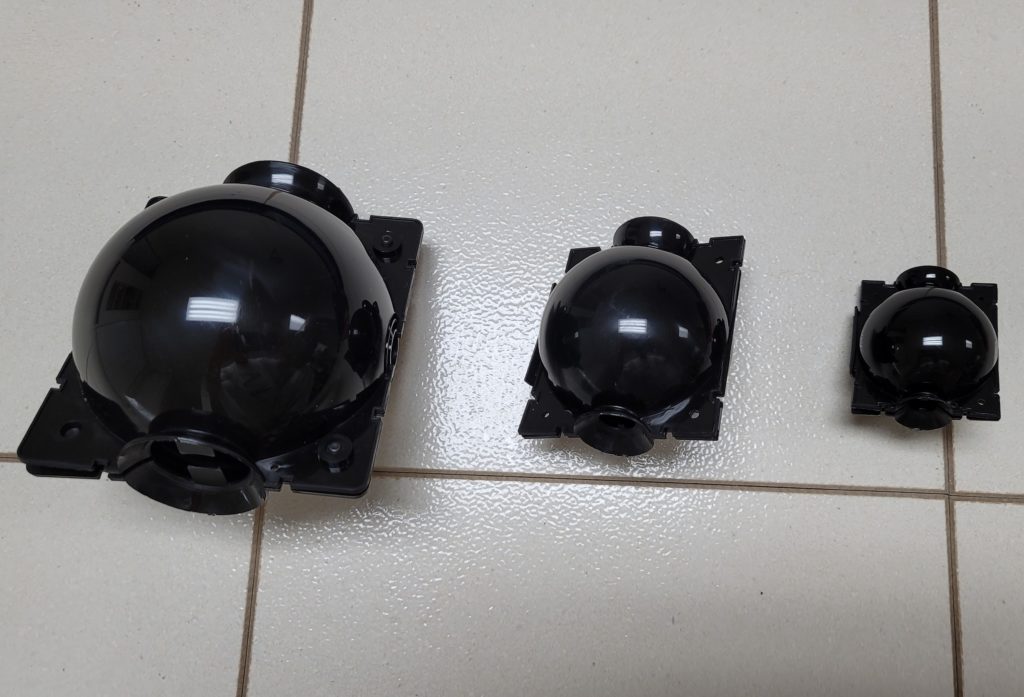
Propagation air layering pods

Propagation by air layering: pods
Air layering pods

The propagation air layering pods simplify the procedure. They are designed to keep a section of stem moist with potting medium for the development of roots. The pods came in three sizes. For most shrubs, either medium or small will be suitable. They can be purchased from online garden stores or Amazon.com. If you do not like to use these pods, you can simply wrap the stem with some potting medium using black plastic sheet and secure with tapes.

Procedure for propagation by air layering
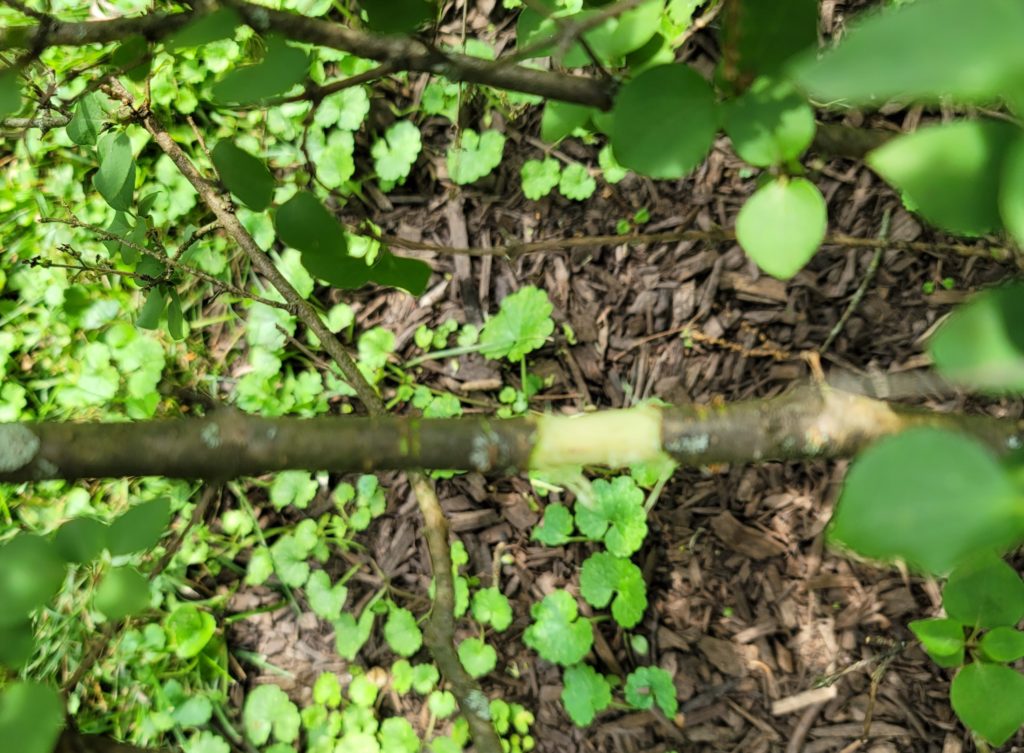
Propagation by air layering: step 1. Remove bark
Remove bark

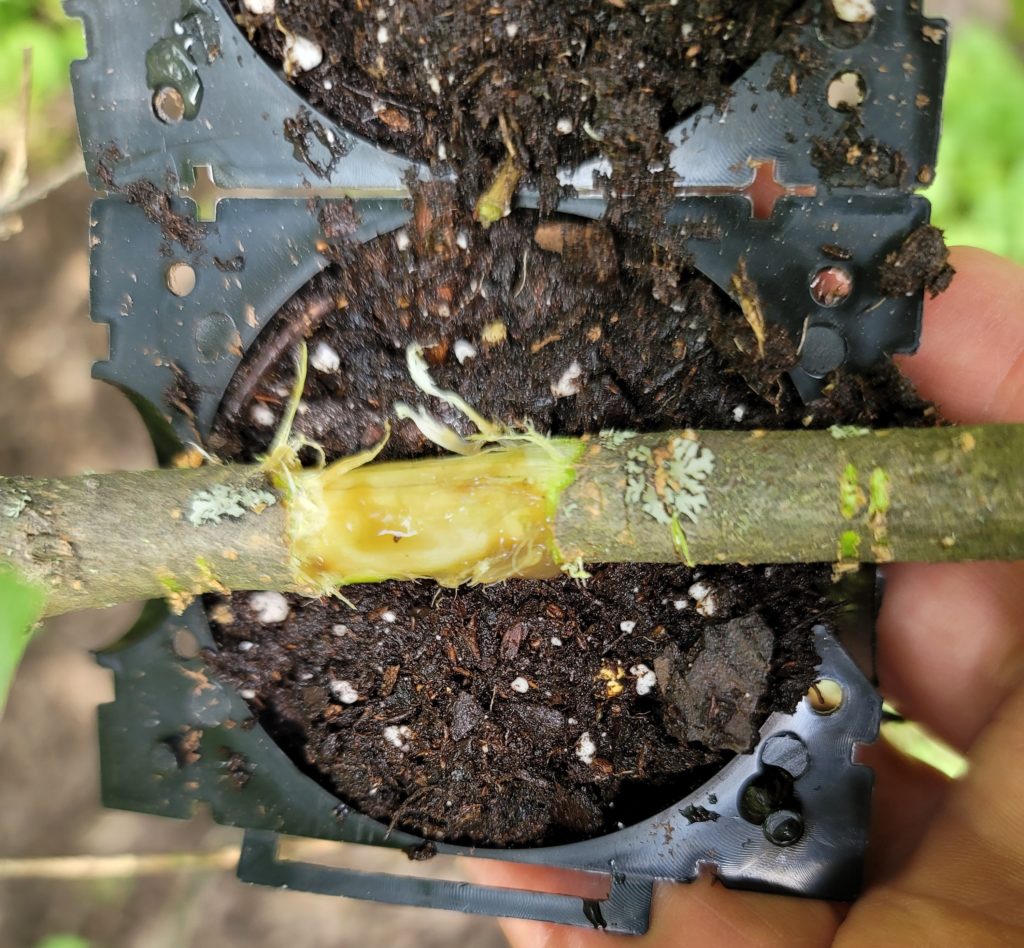
Select a young branch. With a sharp knife, cut around the stem twice about 1 inch apart, and remove the bark between the two cut marks as shown in the picture above. Then scrape some tissue off the exposed stem with the knife.
Propagation by air layering: step 2. Apply rooting gel
Apply rooting gel

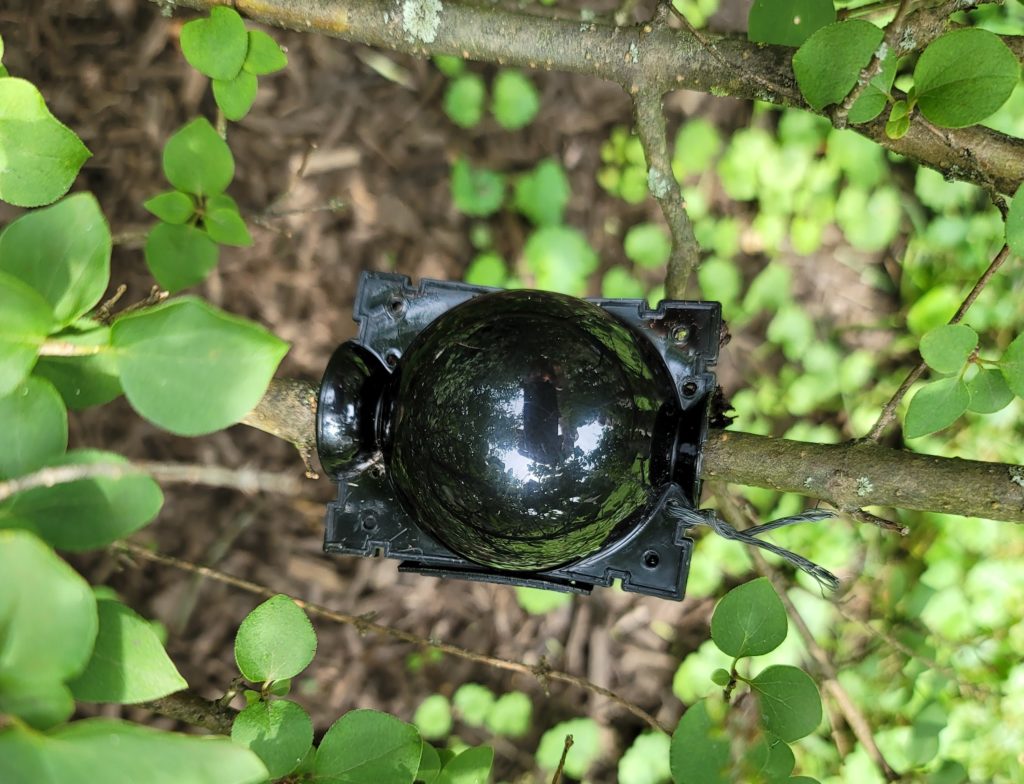
With a Q-tip, apply some rooting gel on the exposed stem. The rooting gel contains a plant hormone to promote root formation. Then fill the two hemispheres of the air layering pod with moist potting medium. Place them in the area of exposed stem, and lock in position as shown in the picture below.
Propagation by air layering: step 3. Enclose treated area with air layering pod
Enclose treated area with air layering pod

Lock the two hemispheres in position with the plastic tab. If desired, secure the pod further with a piece of wire through the holes at the edges as shown in the picture above. But this is optional. Add water once a week through the “funnel” at either end of the pod to keep the potting medium moist.
Propagation by air layering: step 4. Roots have developed
Roots have developed in treated area

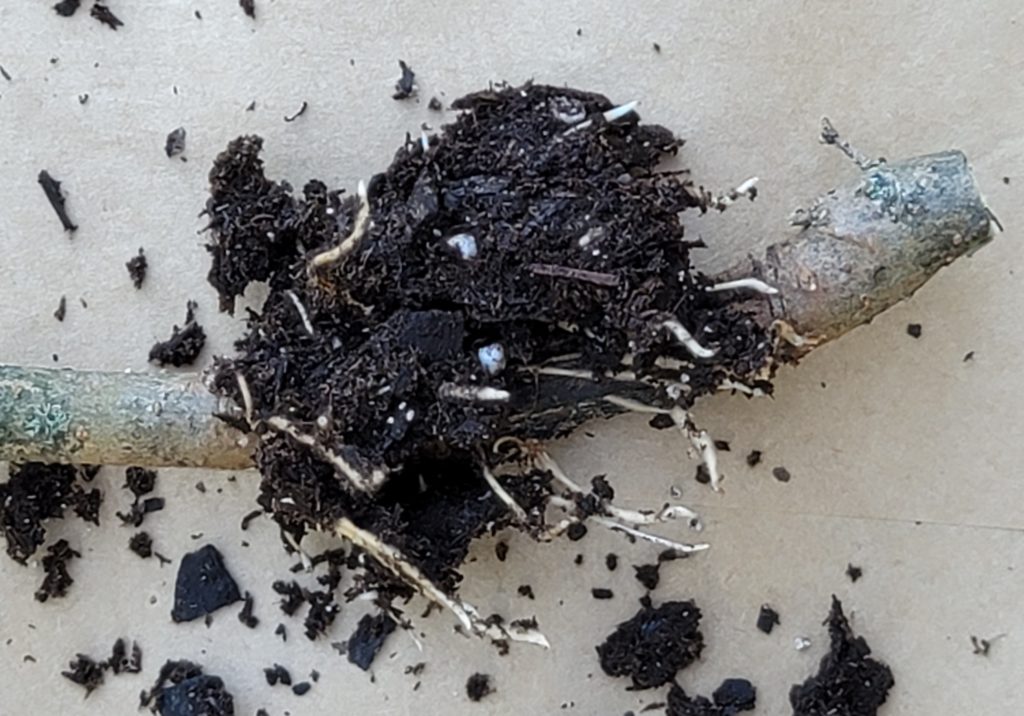
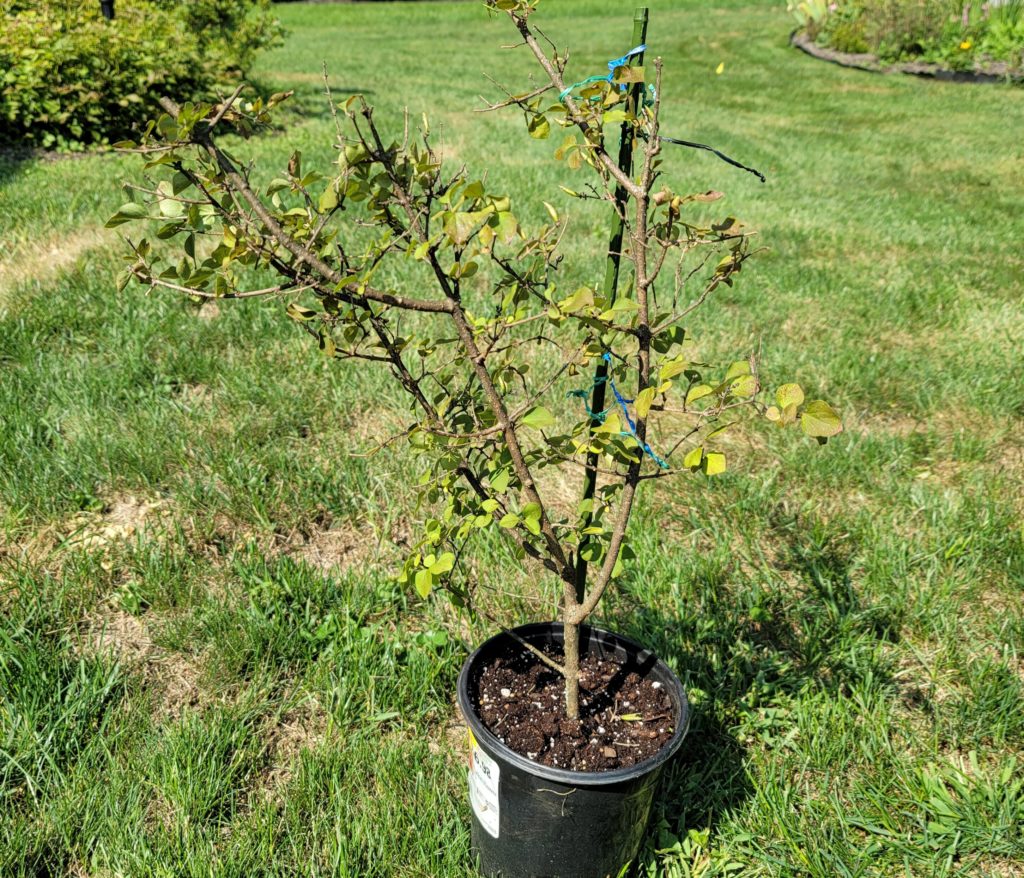
After 1-2 months (depending on the shrub), open the pod. If roots have developed, cut the branch off the parent shrub and transplant it to a pot. You may need to use a stick to support the transplant until the roots are established. You may want to leave the newly rooted cutting in the shade for a few days before placing it in a sunny location to avoid transplanting shock. Water the potted plant once a week (or twice a week in hot weather) to keep the potting medium moist. It may take a few months for the root system to fully develop, before you can transplant this new plant in the ground.
Propagation by air layering: A new rooted plant in pot
A new rooted plant in pot

Transplanting the cutting in ground

After a few months, the root ball of the cutting has developed. You may want to transplant it in the ground. The best time for transplanting the cutting is early fall, so that it can establish before winter sets in. Sometimes, the old leaves may turn yellow and fall off. However, new leaves will appear later.
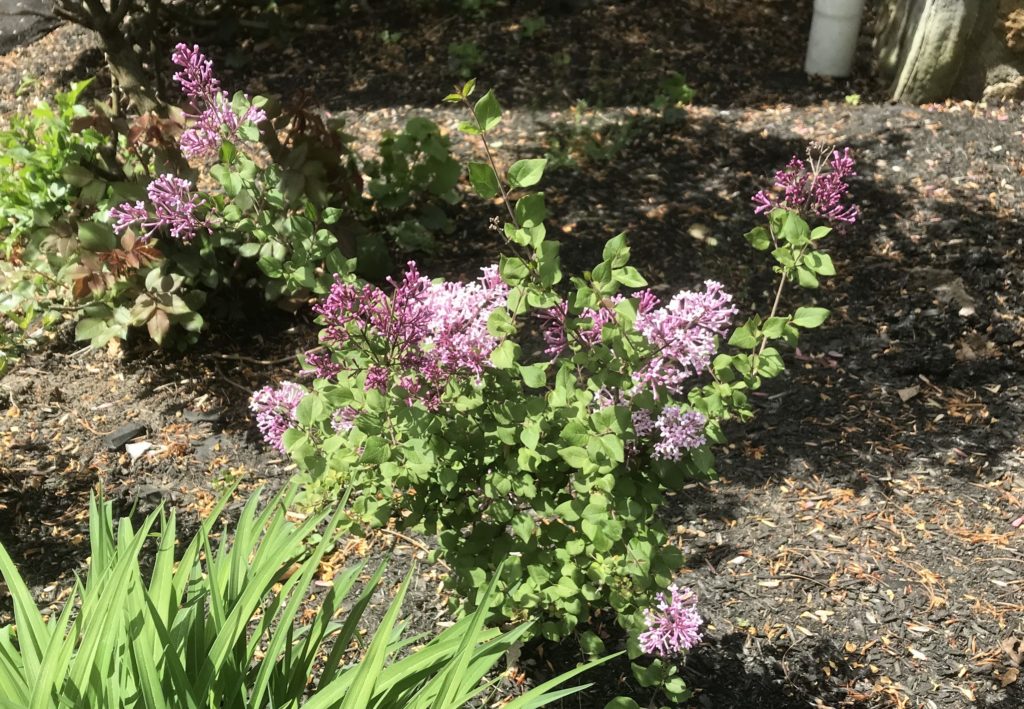
Propagation by air layering: a new Boomerang Lilac in the second spring
A new shrub in the second spring

The picture above shows the new transplant blooming in the second spring. Now, you have cloned a shrub.
Open post Forsythia

Transplanting the root suckers: an easy way to increase the number of shrubs

Introduction

Transplanting the root suckers is an easy way to multiply the number of shrubs in your garden. Many shrubs, such as forsythia and lilacs, will produce root suckers. Root suckers are the vertical growth from the root system of a mother shrub. These suckers may be a nuisance, but you can dig them out and transplant them in another location. This post will show you how to do it.

Transplanting the root suckers: Forsythia with suckers
Forsythia with suckers

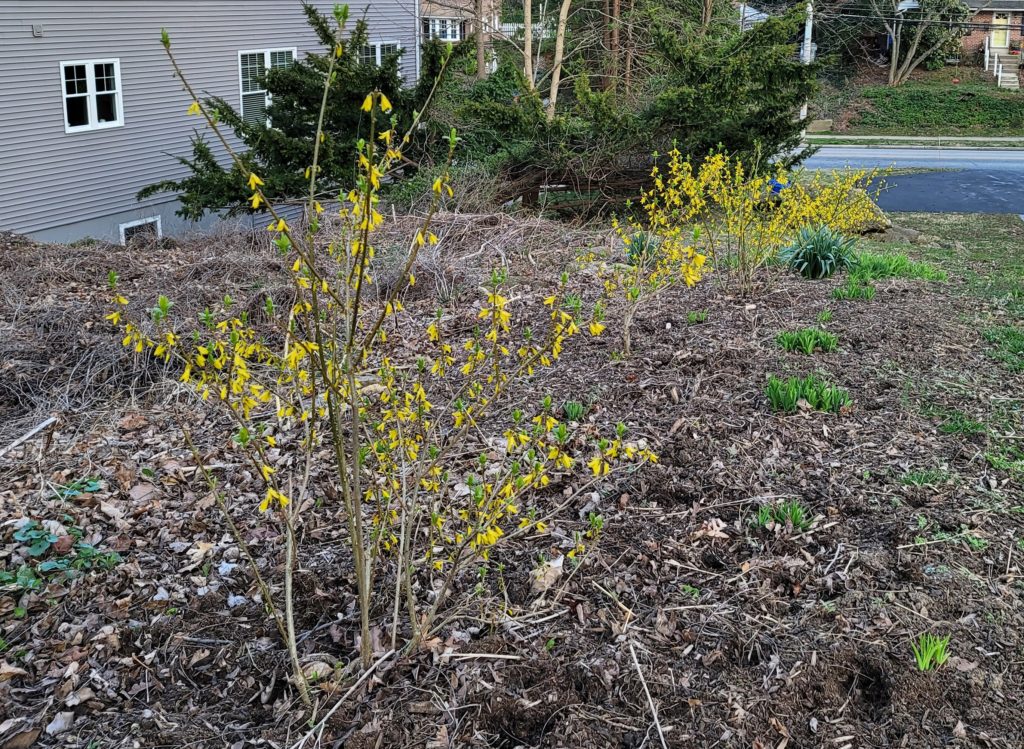
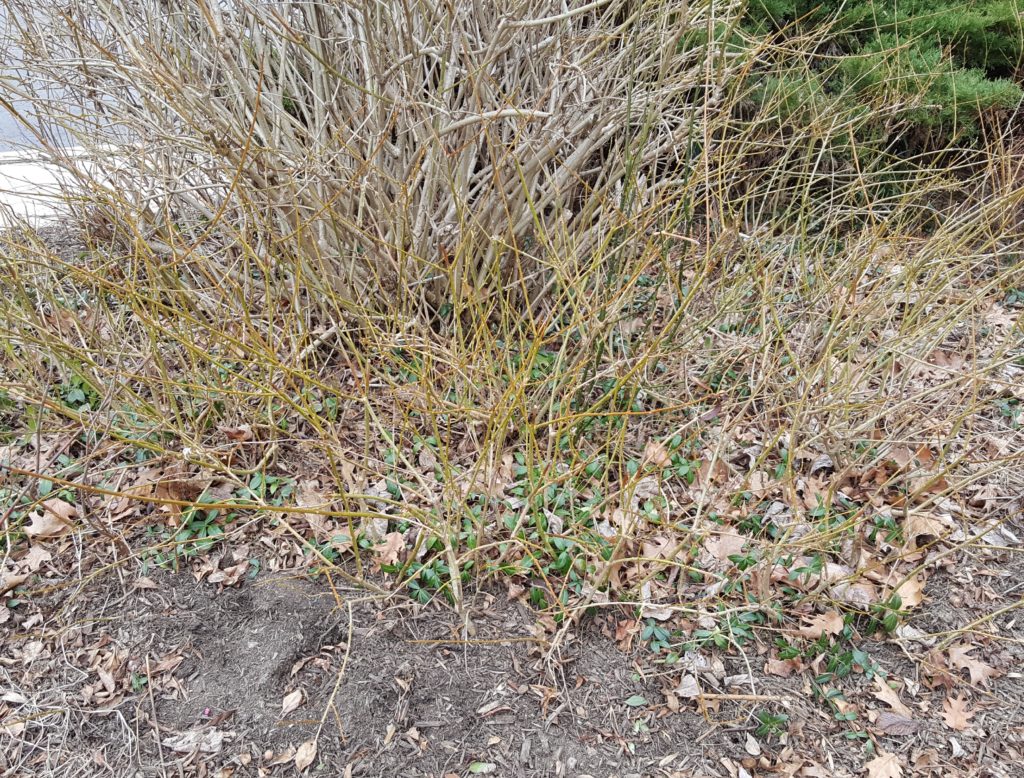
The picture above shows many root suckers (with green stems) of a Forsythia shrub. The best time to dig out these root suckers is early spring when the plants are still dormant. Since they do not have leaves yet, there will be less stress for the new transplants. Just one word of caution, some shrubs are grafted plants. So the suckers are not the true offsprings of the desired shrub.

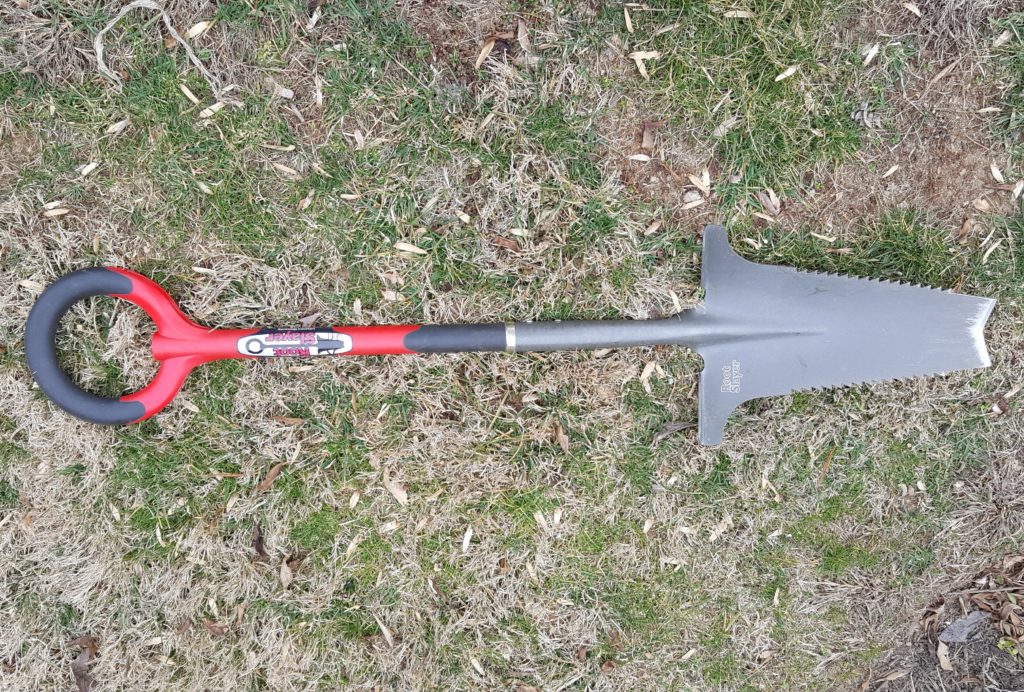
Transplanting the root suckers: Root cutting shovel
Root cutting shovel

Tools and procedure

The best tool for the job is a root cutting shovel (also known as root slayer shovel or root assassin shovel), as shown in the picture above. It has a narrow blade with a sharp inverted V-notch tip and two serrated side edges. Therefore, it can easily cut the roots when you insert it into the soil about 5 inches around the root sucker. After cutting around the sucker for a full circle, you can lift it up easily with a garden fork, and transplant it at a new location. If it did not rain recently, you may water the shrubs thoroughly one day before you do the transplanting. This will make the digging easier and ensure a relatively intact root ball.

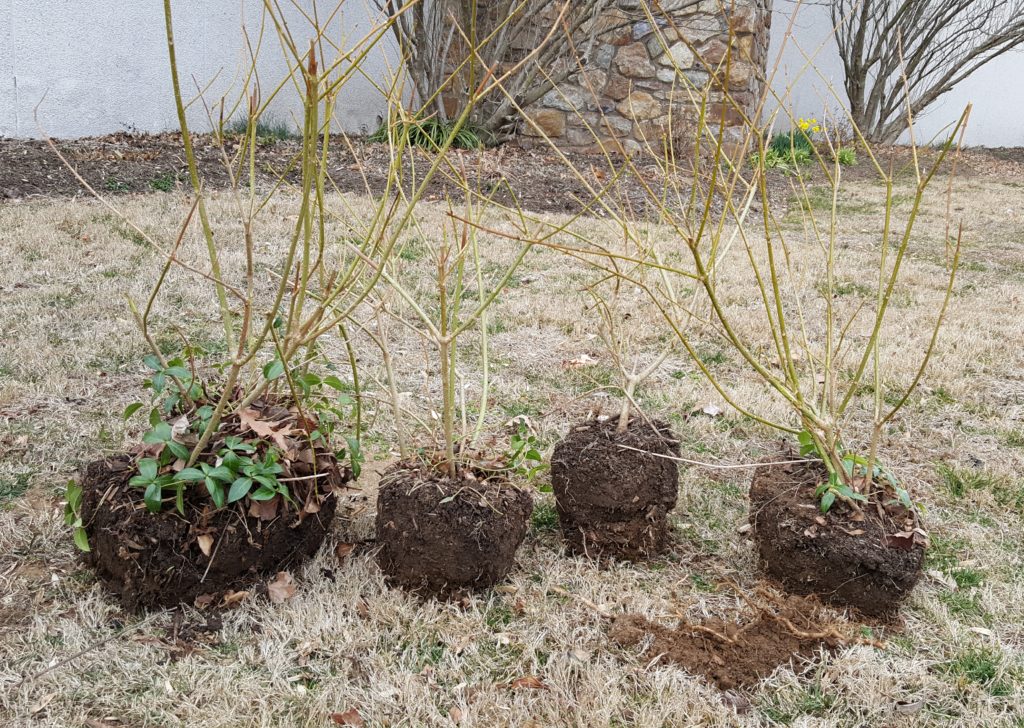
Transplanting the root suckers: Dug-up suckers of forsythia
Dug-up root suckers of forsythia

Picture above shows four suckers of forsythia just dug up. They are ready for planting in a new location.

Transplanting the root suckers

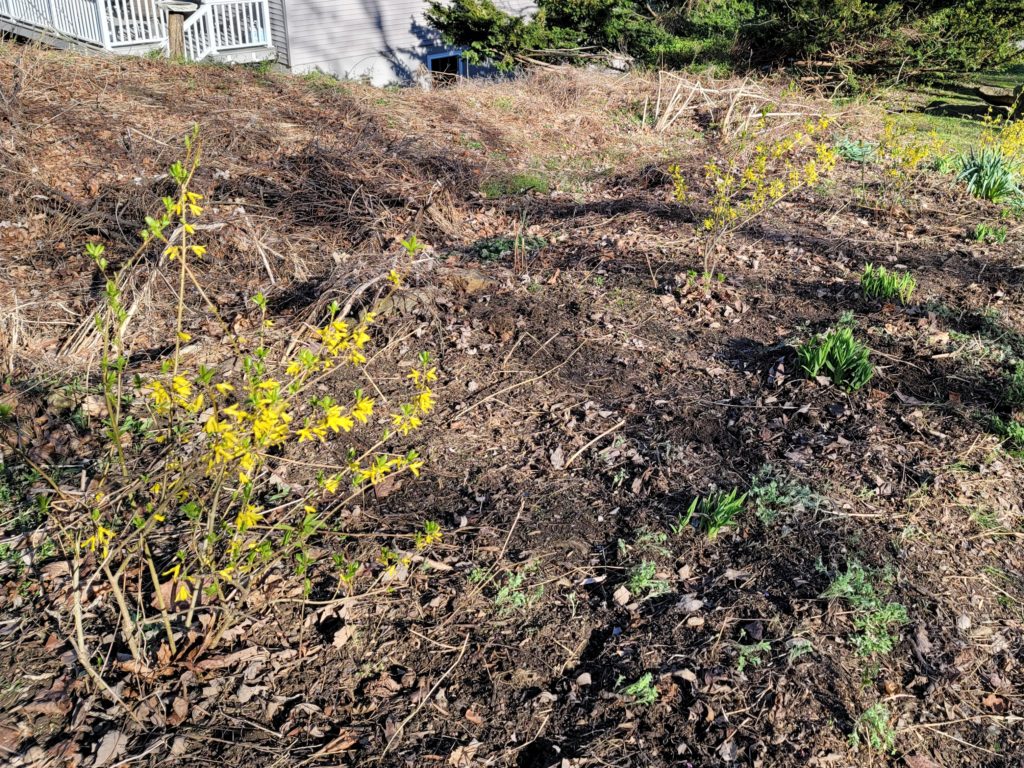
Transplanting the root suckers: Forsythia transplants after one year
Forsythia transplants after one year

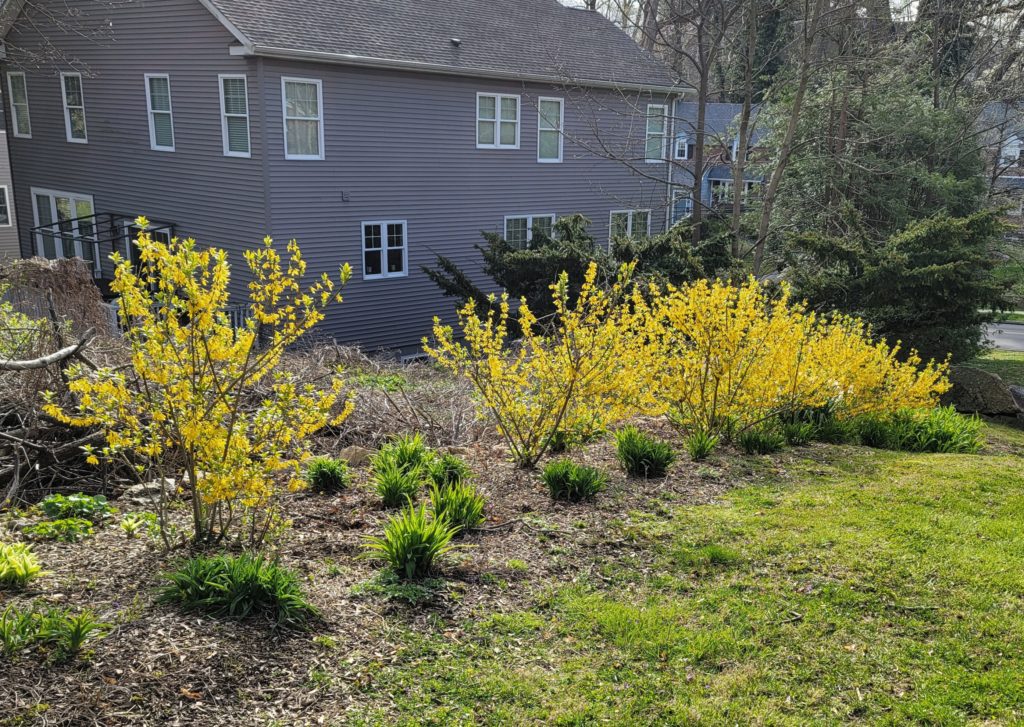
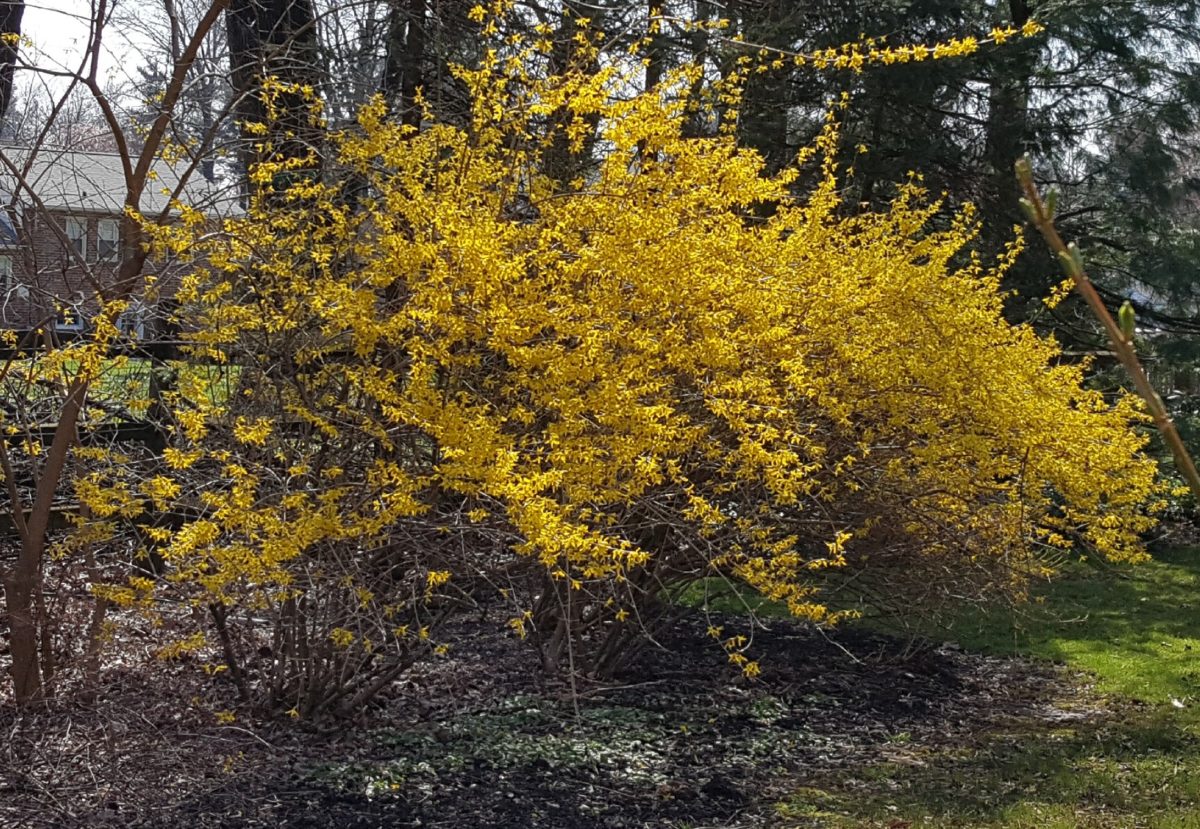
After transplanting, water the new plants at regular intervals in the first year to help them grow until they establish. Picture above shows the forsythias suckers one year after transplanting in a new location, they are blooming in late March. They are really care-free, and just need annual pruning to keep in shape. They are deer resistant and tolerant to black walnut toxin.

Transplanting the root suckers: Forsythia transplants after two years
Forsythia transplants after two years

This picture shows that the transplants are growing very well on the second year without much caring.

Forsythia suckers
Forsythia suckers after 4 years

This picture shows the forsythia transplants after four years. They were pruned to encourage branching for fuller appearance.

Scroll to top
error

Enjoy this blog? Please spread the word :)